
New Study at the University of Ostrava Explores How to Build Healthier Habits
How can we help people incorporate healthier habits into their everyday lives? This is the focus of the main study of the DigiWELL-COMPASS project, which combines digital technologies with ongoing support from a lifestyle coach.
“I’d like to be more physically active and eat healthier, but in the past, my determination never lasted very long,” says Šimon, one of the study participants, describing his motivation. “I signed up because I didn’t want to make these changes on my own this time,” he adds.
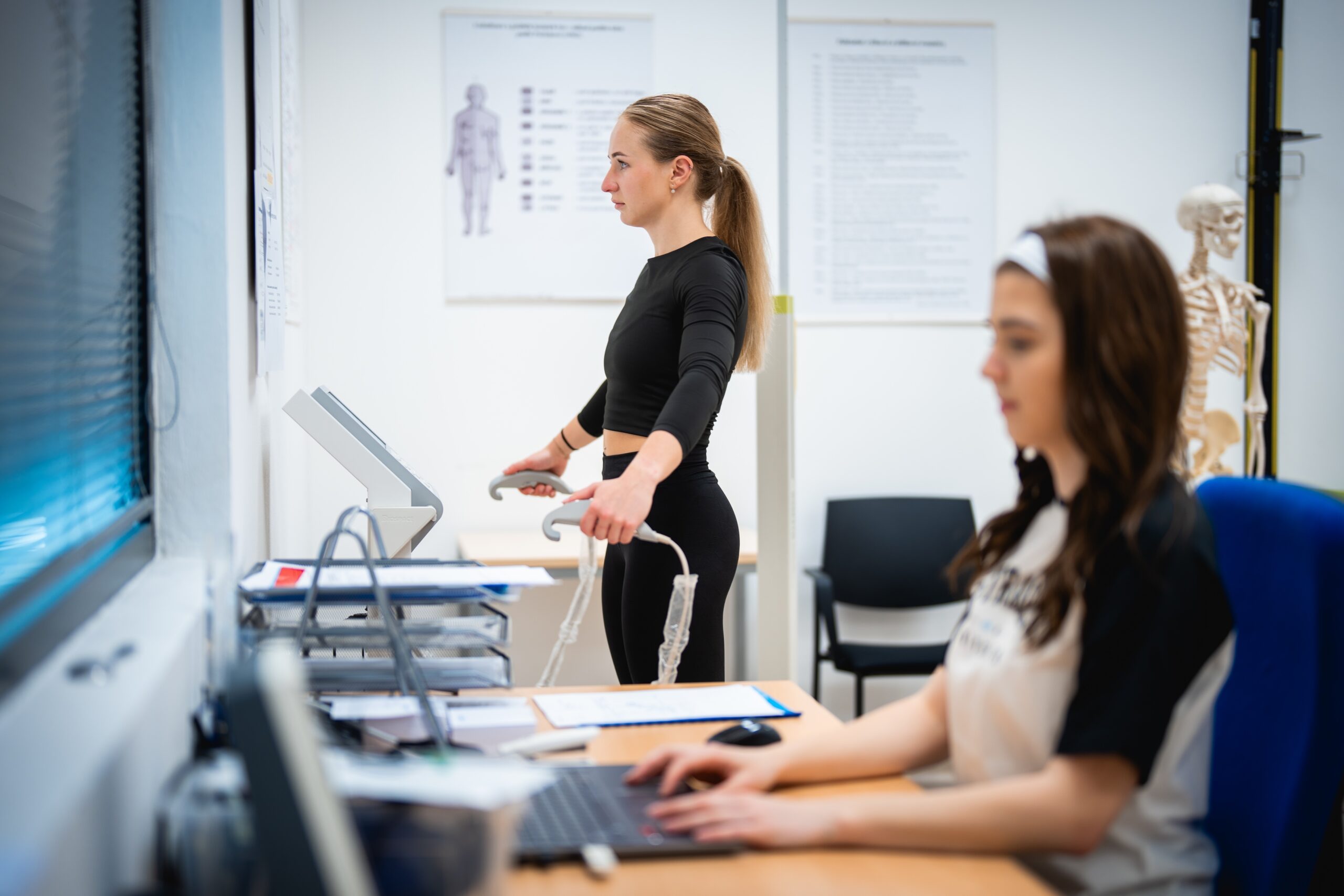
His journey began in the laboratories at the University of Ostrava’s City Campus. “Baseline assessments provide us with information about body composition, physical fitness and a range of other health indicators,” explains researcher Marcela Ely. “But we are also interested in participants’ everyday lives – how physically active they are, what they eat and how they feel,” she adds. The researchers collect this information using wearable devices and mobile apps.
Coaching for lifestyle change
The baseline assessments are followed by a two-week period during which participants wear digital devices, such as smartwatches or accelerometers, to track their physical activity. “It is also important for us to understand each participant’s starting point, what they would like to change and what barriers they most commonly face,” explains Marcela Ely.
I’d like to be more physically active and eat healthier, but in the past, my determination never lasted very long.
Specially trained coaches also play a key role throughout the process. “They help participants identify small, achievable steps towards change that make sense in the context of their own lives,” says the researcher. During coaching sessions, they help participants explore the relationship between what they planned and what they actually managed to achieve. “We discuss what is going well for participants and what challenges they encounter,” she adds.
Two years of preparation with participants and practitioners
The launch of the main study was preceded by two years of preparation. Through workshops and consultation meetings, the research team engaged with representatives of the target population and practitioners. From the outset, the intervention was therefore shaped by the very people it was designed to support. The feasibility of its individual components was subsequently tested in pilot studies.
“Digital technologies allow us to tailor support to individual needs. However, we need to establish how to use them in ways that genuinely help people in their everyday lives,” says Professor Steriani Elavsky, principal investigator of the DigiWELL project. “Our ambition is to translate research findings into practical approaches that help promote overall wellbeing, health and quality of life,” she concludes.
Take part in the DigiWELL-COMPASS study
Are you interested in taking part in research that combines modern technologies with support for a healthier lifestyle? Join the study and become part of the research!