
Technology should not replace human care. But it can complement it sensitively.
Population ageing is placing increasing demands on social services and frontline care workers. In this interview, the authors of a certified methodology from the Faculty of Social Studies at University of Ostrava — Professor Soňa Kalenda Vávrová, Radana Kroutilová Nováková, PhD, and Ivana Bražinová, PhD — discuss how the therapeutic robot PARO can support the mental health of older adults, reduce loneliness, and offer staff practical support when introducing innovations.
Why is the topic of population ageing and elderly care so important today?
We consider the issue of population ageing to be crucial mainly because of the significant demographic changes taking place in the Czech Republic. The number of people aged 80 and over is rapidly increasing, while younger age groups are declining. This has a direct impact on the social and healthcare service systems, which are already in high demand. At the same time, the need for long-term and specialized care is growing, especially for people with dementia and other cognitive disorders. However, the capacity of social services has long been insufficient to meet demand. Elderly care is therefore becoming one of the key issues for the sustainability of the entire social system and for quality of life in old age.
What challenges do residential social care services face most often today?
Residential social care services are currently facing a range of challenges, one of the most significant being the long-term shortage of qualified staff. Working in these services is physically and psychologically demanding, financial compensation remains relatively low, and staff turnover is high. At the same time, the number of clients requiring a higher level of support — especially people with dementia — continues to rise. The capacities of community-based and outpatient care services are not growing in proportion to needs, and in the context of the increasing number of people aged 70+, residential care facilities remain a stable part of the system. In large-capacity institutions, it is also difficult to consistently uphold the principles of individualized and dignified care. All of this is happening while society expects the quality of services provided to remain high or continue improving.
Why did your research focus specifically on working with the PARO robot?
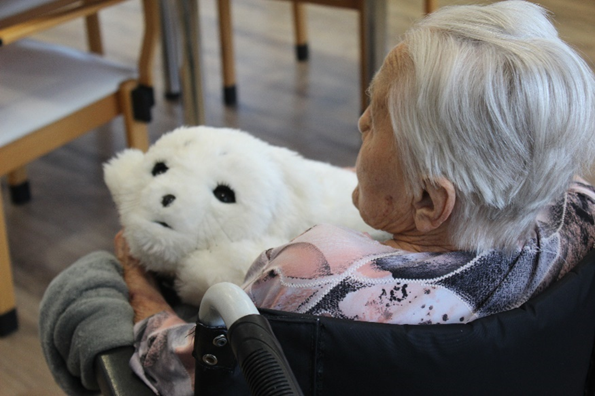
We focused on the PARO robot for several reasons. We started from the fact that people in Czech society generally have a very strong relationship with animals, but clients in most residential facilities cannot keep pets there. PARO can imitate the positive psychological and social effects of contact with an animal without the demands of caring for a living creature. We also chose it because it has the neutral appearance of a baby seal, which does not evoke strong preferences or rejection like, for example, dogs or cats often do in the Czech environment. Another important factor was that PARO has been used internationally for many years and its benefits have been supported by research. Our goal was to bring this experience into Czech social services.
What can PARO offer seniors in everyday care?
PARO provides older adults with support in the area of mental health and social interaction. Interventions involving this robot help reduce loneliness, anxiety, and depressive symptoms. PARO encourages spontaneous communication and social engagement, whether in individual or group activities. Thanks to machine learning technology, it can adapt to specific users and support a personalized approach. It also often revives memories and supports reminiscence therapy. In practice, it expands the range of activation and therapeutic activities available in residential care facilities.
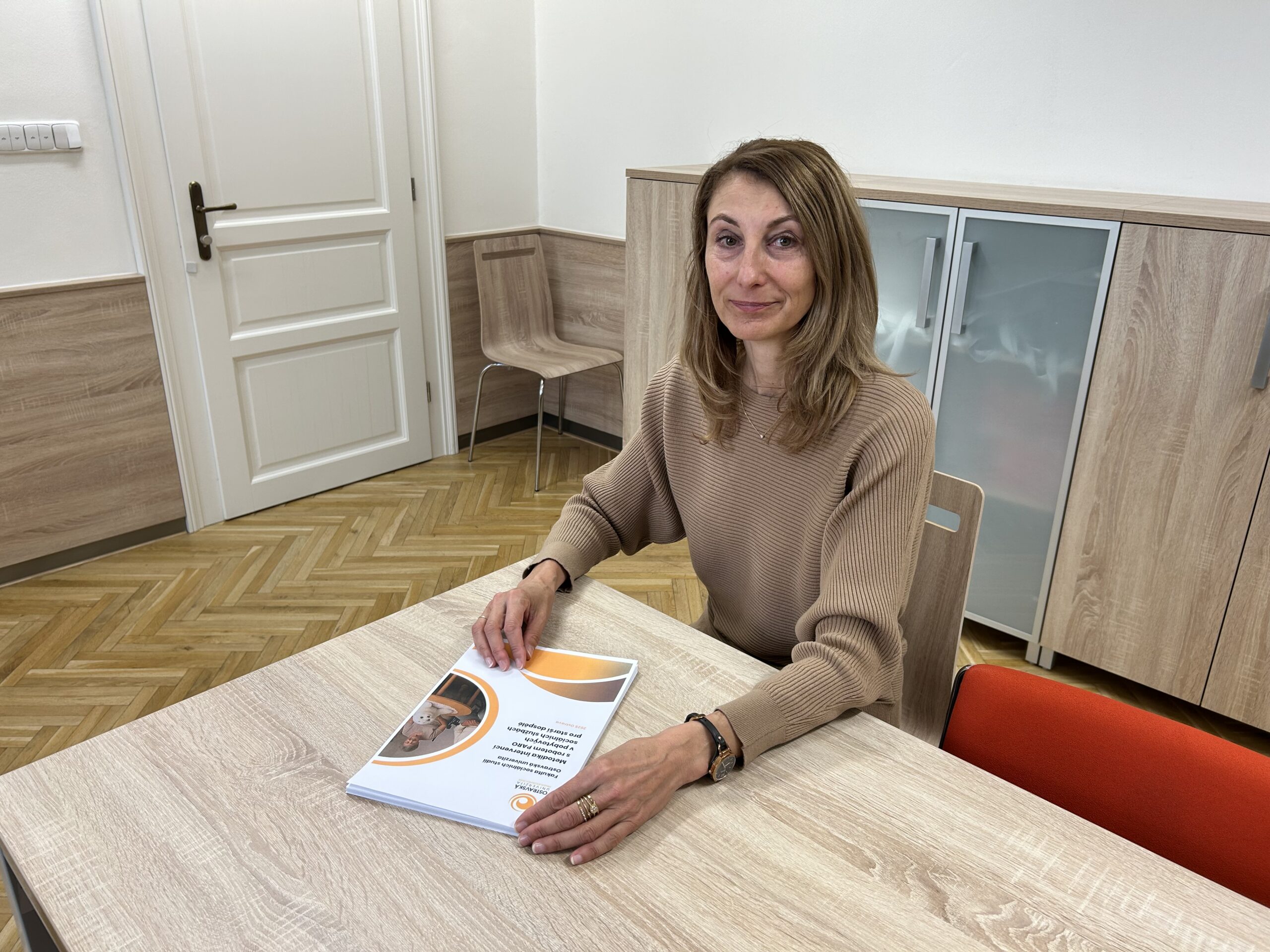
One of the co-authors of the methodology is also the Dean of the Faculty of Social Studies at the University of Ostrava, Professor Soňa Kalenda Vávrová.
What gap in practice is your methodology intended to fill?
Our methodology responds to the absence of methodological guidance for working with the PARO robot in Czech residential social services. Until now, only a foreign manual was available, which did not correspond to the Czech social and cultural context. The methodology is unique because it is based on the experiences of both staff and service users themselves. At the same time, there are very few professional studies in Czech academic literature focusing on the process of implementing robotic technology into social service practice. The methodology therefore describes not only the benefits but also the barriers to implementation. Its aim is to support the meaningful and sustainable use of this technology.
Why is it important that the methodology is certified?
The approval of the methodology is important to us primarily because it represents official recognition of its professional quality and practical usability. It is not only a matter of prestige, but confirmation that the methodology has undergone independent expert evaluation and is recommended for practical use. For social service providers, this signals that it is not an arbitrary material, but a state-recognized and legitimate procedure. Approval by the Ministry of Labour and Social Affairs gives staff and facility management greater confidence when deciding whether to introduce innovations and serves as support in defending their procedures. The methodology is intended to provide a safe framework on which facilities can rely when implementing this technology. Thanks to the ministry’s approval, it also has greater potential for spreading good practice and promoting science communication.
What specific benefits can the methodology bring to clients and staff?
The methodology serves as a practical guide for all facilities considering the integration of therapeutic robots into their practice. For clients, it can help ensure higher-quality, more diverse, and more individualized care while supporting mental health, social involvement, and reducing feelings of loneliness. At the same time, it provides a structured and understandable framework that helps prevent risks and unethical uses of technology with vulnerable groups of people.
For staff, the methodology provides concrete support in deciding whether and how to introduce robots into facilities. It helps unify approaches, strengthen staff competencies, and reduce concerns about new technologies. At the same time, it may help reduce workload and stress and contribute to the prevention of burnout syndrome.
What would you like professional practice to take away from this methodology?
We would like professional practice to view the methodology as support rather than as an administrative burden. The methodology was developed in close cooperation with staff from residential social care facilities and is based directly on their experiences with introducing this technology into everyday care. We tried to listen to their concerns, uncertainties, and practical needs, which is why the methodology was designed to be truly understandable and fully usable in practice.
Its main message is that technologies can be a meaningful complement to human care, not a replacement for it. We would like it to give professionals greater confidence when introducing new technologies into practice. At the same time, we place strong emphasis on ethics, dignity, and respect for the individual needs of clients. The methodology aims to demonstrate that high-quality care arises from the combination of human potential, professional judgment, and modern technology.