“WHEN WE STUDY, WE CHANGE STEREOTYPES,” SAID AT A WORKSHOP WITH BRNO YOUTH BY ROMAN AND DANIELA KOKY
How do prejudices influence our lives? And what can we do about them — as individuals, as a community and as scientists? These were the questions at the heart of a November discussion organised by DigiWELL in cooperation with IQ Roma Service and the Czech Academy of Sciences at the IQ Roma centre in Brno.
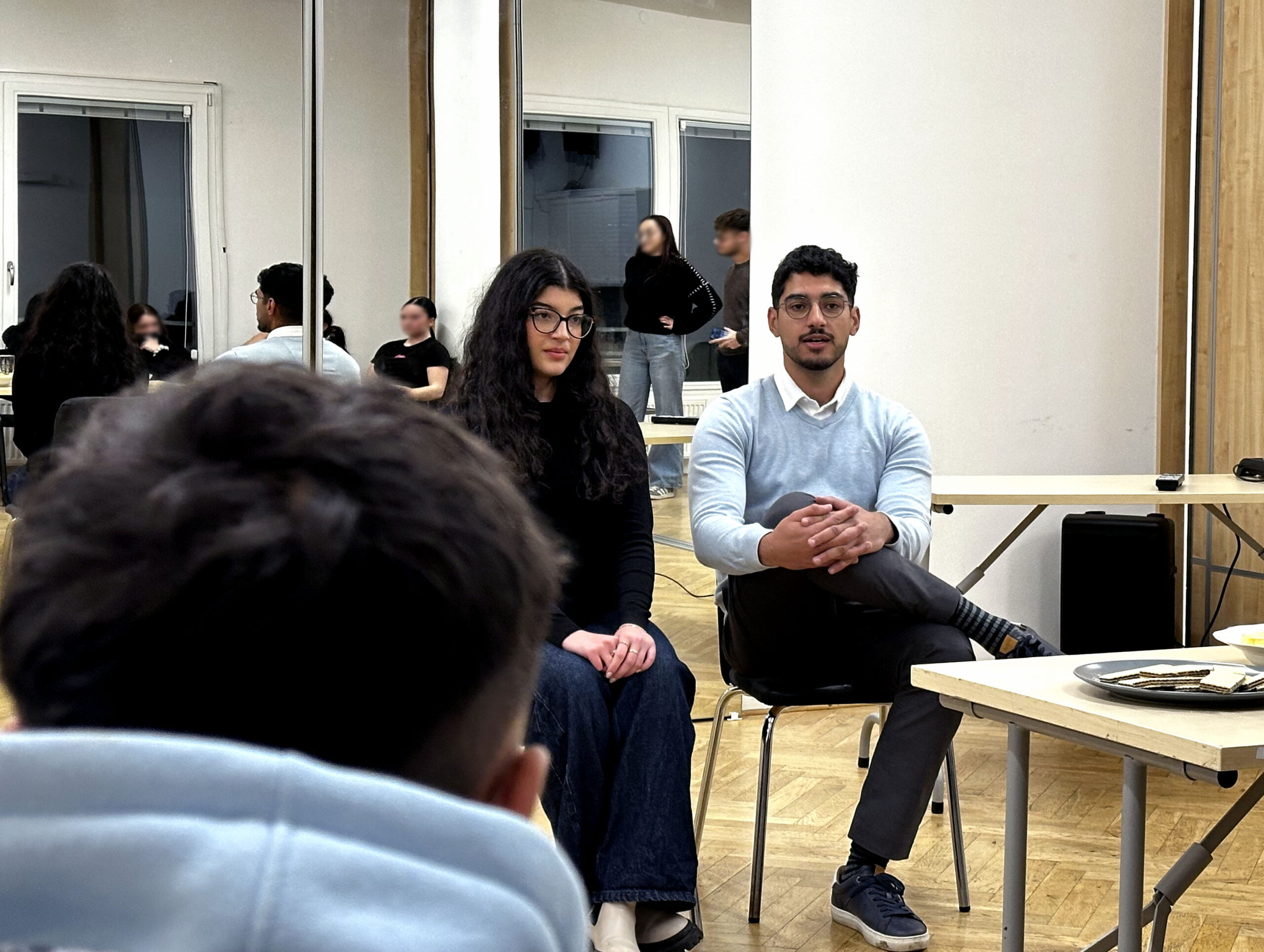
The guest of the meeting was Mgr. Roman Koky, a psychologist and researcher specialising in the psychology of intergroup relations — that is, how different groups in society think about one another, how prejudices arise and how they shape our behaviour. Roman Koky also approaches the topic not only as an expert but as a member of the Roma community. Participants therefore had the opportunity to hear how personal experience and scientific perspective intersect in his life.
The workshop was followed by a discussion about education and life choices among young people from the Roma community. Daniela Kokyová, a student at the Faculty of Civil Engineering of Brno University of Technology, also joined this part and shared her experience of studying at a technical university.
The evening was moderated by Assoc. Prof. Martina Hřebíčková.
HIGH SCHOOL STUDENTS FACE TO FACE WITH PREJUDICE
With the young clients of IQ Roma Service, speakers openly discussed what stereotypes and prejudices mean in practice and how to approach them in personal life.
“We can also reduce prejudice by studying,” the speakers emphasised.
The young participants then reflected on what they would like to study, how to choose a school and what studying actually involves.
IMPACT ON WELLBEING
Prejudices and stereotypes are not merely “opinions” — they shape mental wellbeing, self-perception and the decision-making of young people. Today they are often reinforced in the online environment as well, for example in social media comments and simplified images of “others.”
This is also why DigiWELL addresses topics that connect psychology, social relations and digital technologies. Meetings like this show that change begins with open dialogue, critical thinking and the courage to follow one’s own path.